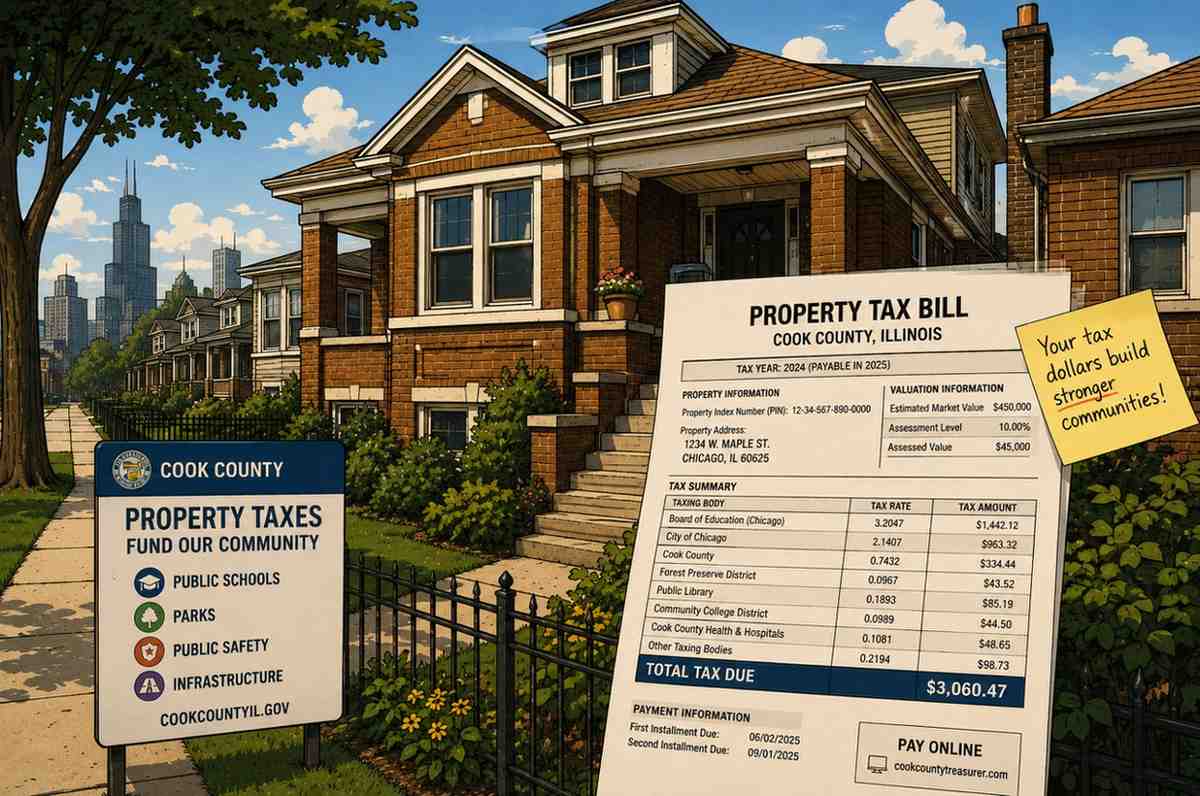
Property tax in Cook County is among the highest in the nation, with an average effective tax rate of about 1.89% of a property’s market value. Your final tax bill depends on several factors, including your property’s assessed value, state equalization multipliers, local tax levies for schools, police, and other services, as well as any exemptions that may apply.
Understanding how property taxes work can help homeowners avoid surprises and plan their finances more effectively. Knowing when taxes are due, what exemptions are available, and how assessments are calculated can also help reduce your overall tax burden. If high property taxes are creating financial stress or making it difficult to keep your home, Windy City Home Buyer offers a simple way to sell your house quickly and move forward with confidence.
How Property Tax in Cook County Is Calculated?
Many homeowners wonder how their tax bill is created. Understanding the process can make things less confusing. Property tax in Cook County follows a few simple steps. The county looks at your home’s value, applies state rules, checks for exemptions, and then uses local tax rates to calculate your final bill.
If you own a home, learning how property tax in Cook County, Illinois works can help you plan your budget. This property tax guide in Cook County explains each step in a simple way.
Fair Market Value
The first step is finding the fair market value of your home. This value shows what your home could sell for in the current market. Home prices, nearby sales, and property features can affect this amount. In Cook County, residential homes are assessed at 10% of their fair market value. For example, if your home is worth $300,000, the assessed value starts at $30,000.
The Cook County Assessor reviews homes and updates values over time. Changes in the housing market can cause values to go up or down. Because of this, your tax bill may change from one year to the next.
Equalized Assessed Value (EAV)
After the county finds the assessed value, the state applies an equalization factor. This step creates the Equalized Assessed Value, also called EAV. The multiplier helps make property values fair across different areas. It keeps tax assessments balanced throughout the county and the rest of Illinois. The Equalized Assessed Value becomes the number used to figure out your taxable amount. This process helps create a fair system for homeowners.
Exemptions That Reduce Taxes
Many homeowners can lower their tax bills through exemptions. These programs reduce the taxable value of a property. Lower taxable value often means lower taxes.
Homeowner Exemption
The Homeowner Exemption is one of the most common programs. It helps people who live in their homes as their main residence. This exemption can save homeowners hundreds of dollars each year.
Senior Exemption
Older homeowners may qualify for a Senior Exemption. This program lowers the assessed value of the home. It helps seniors manage rising housing costs.
Senior Freeze Exemption
The Senior Freeze Exemption protects qualified seniors from higher assessments caused by increasing home values. It helps keep property taxes more stable.
Disabled Persons Exemption
People with disabilities may qualify for special exemptions. These programs provide tax relief and make homeownership more affordable. Checking for available exemptions every year can help lower your costs. This simple step can make a big difference over time.
Local Tax Rates
After exemptions are applied, local governments set the tax rates. These rates help pay for important services in the community. The property tax rate in Cook County, IL can vary depending on where you live.
Schools
A large part of property taxes supports local schools. These funds help pay teachers, staff, programs, and building maintenance.
Libraries
Public libraries also receive money from property taxes. Libraries provide books, computers, learning programs, and community events.
Parks
Park districts use tax money to maintain playgrounds, sports fields, and green spaces. These areas help families enjoy outdoor activities.
Police Departments
Police departments rely on property taxes to provide public safety. These funds help pay officers, equipment, and emergency services.
Fire Protection Districts
Fire departments and fire protection districts also receive tax revenue. These funds help support firefighters, rescue teams, and emergency equipment.
Why Understanding Property Taxes Matters?
Knowing how taxes work can help you make better decisions. It can also help you avoid surprises when your bill arrives. Understanding property tax in Cook County gives homeowners more control over their finances.
Some homeowners face challenges when taxes become too expensive. Others may inherit a house with unpaid taxes. In these situations, many people look for cash home buyers in Chicago for a fast and simple solution. Families who need to sell inherited houses in Chicago may also choose to sell without making repairs or waiting months for a buyer. Learning how taxes are calculated can help you protect your finances and plan for the future.
Property Tax Rate in Cook County, IL
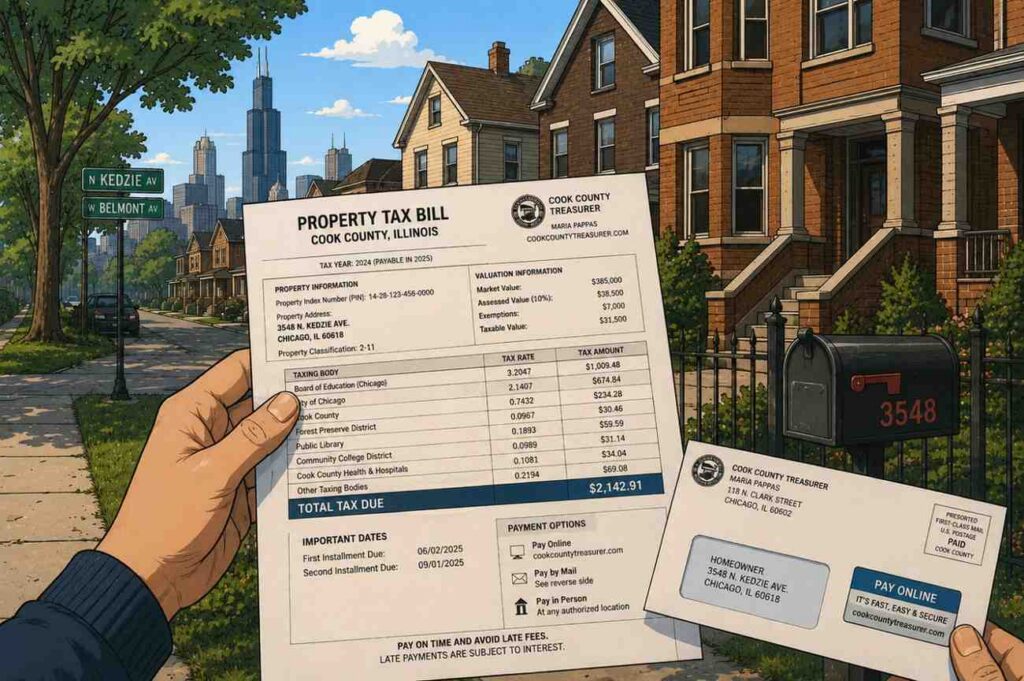
Many homeowners want to understand how much they may owe each year. Property tax in Cook County can seem confusing at first. However, learning about tax rates can help you plan your budget and avoid surprises.
The amount you pay depends on several factors. These include where you live, the value of your home, and the local services in your area. This property tax guide in Cook County explains the basics in simple terms.
Average Property Tax Rate in Cook County
The average property tax rate in Cook County, IL is one of the highest in the state. The effective tax rate is about 1.89% of a home’s market value. This means homeowners often pay more compared to many other parts of Illinois.
For example, a home worth $300,000 may have a yearly property tax bill of about $5,670. The actual amount can be higher or lower depending on the location and available exemptions.
Property tax in Cook County, Illinois helps support important public services. These services include schools, police departments, libraries, and park districts. Taxes also help pay for roads, fire protection, and other community needs.
Why Property Tax Rates Differ by City and Township?
Not every homeowner pays the same rate. Tax rates vary from one city or township to another. This is because each local area has its own budget and needs.
Some communities spend more money on schools and public services. Others may have lower costs. As a result, property owners in different locations may receive different tax bills. For example, homes in one township may have higher taxes than homes in another township, even if the properties have similar values.
Factors That Affect Property Taxes
Several things affect how much you pay each year.
Home Value
The value of your home plays a big role. Higher home values usually lead to higher taxes.
Local Government Budgets
Schools, libraries, parks, police departments, and fire districts need funding. Local governments set budgets based on these needs. Larger budgets can lead to higher tax rates.
Tax Exemptions
Exemptions can lower your taxable value. Programs like the Homeowner Exemption and Senior Exemption can help reduce your bill.
Changes in Property Assessments
The Cook County Assessor reviews property values on a regular basis. If home values increase, taxes may increase as well.
Community Improvements
New schools, roads, and public projects can affect local budgets. These changes may influence future tax rates.
How Cook County Compares With Other Illinois Counties
Property tax in Cook County is generally higher than in many other counties in Illinois. Counties with smaller populations often have lower tax rates. However, rates can still vary depending on local needs and spending.
Cook County has a large population and many public services. These services require funding, which helps explain why taxes are higher. Even though taxes are high, many homeowners choose to stay because of the area’s schools, jobs, transportation, and community resources.
Why Understanding Tax Rates Matters
Knowing how taxes work can help you make smart decisions. It can also help you prepare for future expenses. Reviewing your property tax bill each year can help you catch errors and take advantage of available exemptions. Sometimes, high taxes create financial stress. Some homeowners may also own properties with repair issues or city violations. In these situations, many people choose to sell houses with code violations instead of spending money on repairs.
Others may need a quick and simple solution because of rising costs. If keeping up with expenses becomes difficult, some homeowners decide to sell your house fast in Illinois and move on without the stress of listing with an agent. Understanding the property tax rate in Cook County, IL can help you stay informed and make the best choice for your home and finances.
When Are Property Taxes Due in Cook County?
Knowing the payment dates can help you avoid extra costs. Property tax in Cook County follows a two-payment system each year. Homeowners receive two installments instead of one large bill. Understanding these dates is an important part of any property tax guide in Cook County. Paying on time can help you avoid penalties and protect your finances.
First Installment
The first installment usually comes early in the year. It is often due around March. The amount equals 55% of the total property tax bill from the previous year. This payment gives homeowners time to spread out their tax costs. The county uses the previous year’s bill because current assessments and tax rates may not be ready yet.
Even if your home’s value changes, the first installment remains based on the prior year’s taxes. This makes it easier to estimate how much you will owe. Many homeowners use mortgage escrow accounts to make this payment. Others choose to pay the bill directly.
Second Installment
The second installment arrives later in the year. It often comes during the summer or fall. This payment reflects the current year’s tax information. The county updates property assessments before sending the second bill. Any exemptions you qualify for will also affect the amount due. Changes in the property tax rate in Cook County, IL may increase or lower your bill. New assessments and local tax rates also play a role.
Because of these updates, the second installment may differ from the first payment. Homeowners should review the bill carefully to make sure everything looks correct. Property tax in Cook County, Illinois can change from year to year. Staying informed can help you prepare for these changes.
What Happens If You Pay Late?
Missing a payment can lead to serious problems. It is important to pay your taxes before the due date whenever possible.
Penalties
Late payments usually result in penalties. These extra charges increase the amount you owe.
Interest Charges
Interest begins to grow on unpaid taxes. The longer the bill remains unpaid, the more money you may owe.
Tax Liens
The county can place a tax lien on your property. A lien is a legal claim against your home because of unpaid taxes. A tax lien can create problems if you want to refinance or sell your property in the future.
Risk of Tax Sales
If taxes remain unpaid for too long, the property may face a tax sale. Investors can buy the unpaid taxes, which may create more financial stress for the homeowner. Because of this risk, it is important to address unpaid taxes as soon as possible.
Why Keeping Track of Due Dates Matters
Keeping up with payment dates can save money and reduce stress. Reviewing your bills each year is a smart habit. It can also help you catch errors and confirm that exemptions appear correctly. Many homeowners use reminders or automatic payments to avoid missing deadlines. Others seek help when taxes become difficult to manage.
If you need guidance, our professional team is ready to answer questions and provide support. We proudly serve homeowners throughout our service areas and work hard to make the process simple. You can also read home seller reviews to learn how we have helped other homeowners during difficult situations. Understanding payment deadlines and staying informed about property tax in Cook County can help you protect your home and avoid costly problems.
How to Check Your Property Tax in Cook County?
Checking your records each year can help you stay informed. Property tax in Cook County may change because of new assessments, exemptions, and local tax rates. This property tax guide in Cook County explains simple ways to review your information.
Using Your Property Index Number (PIN)
Your Property Index Number, or PIN, helps you find tax records. You can find this number on past tax bills or property documents. Use your PIN to look up property tax in Cook County, Illinois and view your account information.
Visiting the Cook County Treasurer Website
The Cook County Treasurer website makes it easy to check your tax bill. You can see payment history, due dates, and current balances. You can also review changes in the property tax rate in Cook County, IL.
Reviewing Your Tax History
Looking at past records helps you track changes over time. It also helps you confirm payments and make sure exemptions appear correctly.
Looking for Refund Opportunities
Some homeowners qualify for refunds because of overpayments or missed exemptions. Reviewing your records each year can help you find these savings.
Checking your taxes regularly can help you avoid problems. If you are behind on property tax in Illinois or need to sell fire damaged houses in Illinois, understanding your records can help you make better decisions.
Need to Sell Your House Because of High Property Taxes?
High taxes can put pressure on homeowners. Property tax in Cook County can become hard to manage when bills keep rising. Some people face missed payments, inherited homes, or other financial problems. If this happens, you still have options.
Sell Your House As-Is
Windy City Home Buyer buys houses in their current condition. You do not need to make repairs or clean the property. We buy homes with damage, outdated features, and other issues.
No Agent Fees or Commissions
Selling through an agent can cost thousands of dollars. With us, there are no commissions or hidden fees. You keep more of your money.
Get a Fast Cash Offer
We provide fair cash offers for homeowners across Illinois. Our process is simple and easy to understand. Many sellers can close in as little as seven days.
Choose Your Closing Date
You decide when you want to close. We handle the paperwork and make the process smooth from start to finish.
Help for Homeowners Facing Tax Problems
Property tax in Cook County, Illinois can become overwhelming. Rising bills and changes in the property tax rate in Cook County, IL may create financial stress. This property tax guide in Cook County is here to help homeowners understand their options.
If you are dealing with problem tenants, we can also help you sell tenant occupied houses without repairs or long delays. Contact us today to learn how Windy City Home Buyer can help you move forward with confidence.
FAQs
How is property tax in Cook County calculated?
Property tax in Cook County is based on your home’s assessed value, exemptions, and local tax rates. Schools, parks, and other services also affect the final bill.
What is the average property tax rate in Cook County, IL?
The average effective property tax rate in Cook County, IL is about 1.89%. The exact amount depends on your home’s value and location.
When are property taxes due in Cook County?
Cook County property taxes are paid in two installments. The first installment is usually due around March, while the second installment arrives later in the year.
Can I lower my property taxes in Cook County?
Yes. Homeowners may qualify for exemptions, such as the Homeowner Exemption, Senior Exemption, or Disabled Persons Exemption. These programs can help reduce your tax bill.
Can I sell my house if I am struggling with high property taxes?
Yes. If high property tax in Cook County has become difficult to manage, Windy City Home Buyer can buy your house as-is. You do not need repairs, and you can receive a fair cash offer with a fast closing process.